Interviews and Letters
An Interview with Linda Williamson and Claire McNicol
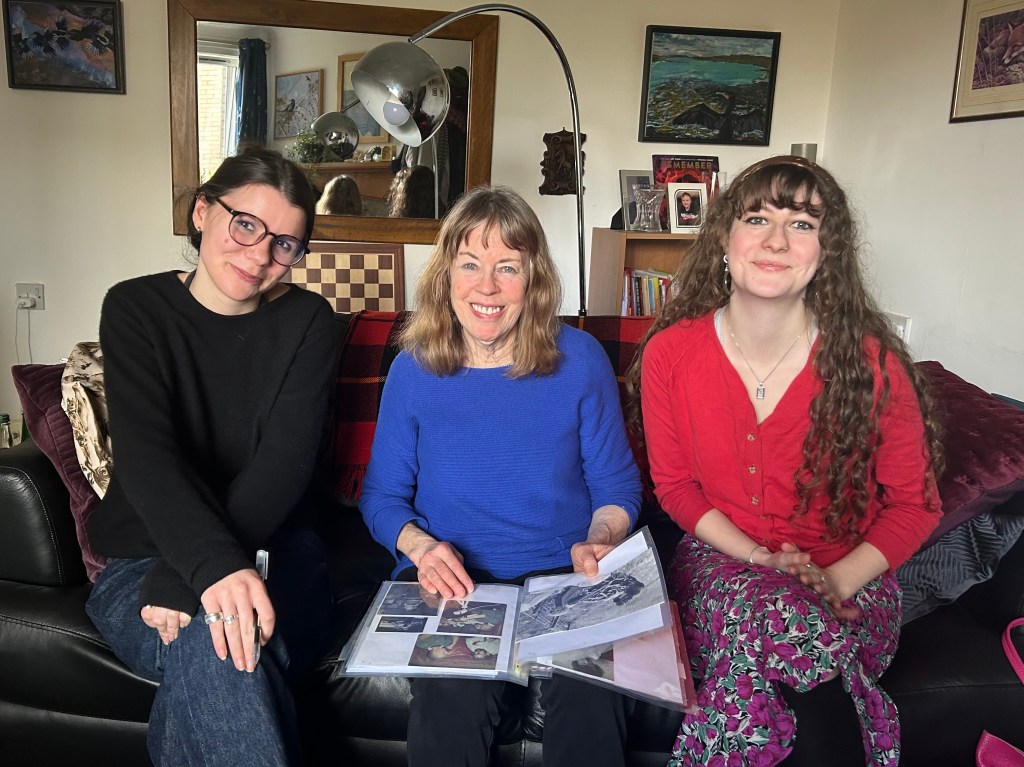
Recently, our 2025/26 Presidents Meg and Kristy had the chance to sit down with Linda Williamson and Claire McNicol, two exceptional storytellers living in Edinburgh. Their work as storytellers resonated greatly with us, particularly as we have worked on ‘Solstice’. What follows is a short interview we conducted with the two women, after which Linda embellished her answers via email.
Interview conducted by Kristy Galbraith and Meg Leaver, transcribed by Meg Leaver, and edited by Kristy Galbraith and Bella Henry.
How does storytelling connect you to your roots?
Claire: I was born in the north of Ireland, in a place called Lisburn, which is officially a city but it’s really more like a town, it is near Belfast – eight miles outside of Belfast.
And it was a big centre of the linen industry in Ireland, so basically in linear fashion my mum and dad, particularly my dad, was a big storyteller and would tell us the story of having me as a baby in his arms and singing to me, and when he stopped I’d be nodding my head and doing that [waving] with my arms and legs to get him to go again, so I think the love of singing and somebody being like that with me was there from the outset. And then as a teenager, I was really really lucky because my grandmother was really close. And I ran at that time for Northern Ireland, so I did these training runs where I looped round and ended up in her living room and then sat for hours and hours and hours and then got a cup of tea and then ran the last wee bit home. And so I’ve been thinking about that so much, like that was just – it was a saving grace, I would say, because I would’ve been quite, at that stage, quite anxious, like a lot of young girls at that stage, very wanting to get everything perfect. And get great academic results. In the school there was a lot of academic pressure and this was just like this sort of ‘woahh’.
Linda: An oasis.
Claire: This is my life lived here, telling all these stories so everything was put right back into perspective. All those worries were shed off and then this absolute …
All the family stories, her life story, coming down from my great grandmother. I’ve got it all written, all on scrappy bits of paper … I had all that, you know, and I studied English language and literature at A level. I always loved that and then did my sociology, social work. I’ve always worked with people, you know… loved language, loved stories and then, you know, studied in Bath. I did sociology and social work but in between I had the year in the States. In the States there was a fantastic programme called Au Pair in America, and I lived outside of Washington D.C. I worked for two lawyers for the state, and looked after their children. And the programme was that the family paid for you to do an evening class and I didn’t want to do anything academic, you know, I wanted a big space from that. I went to the community college and learnt to be a clown. I called myself Clover Clown, and I had a pink outfit, it was very cute – white face, orange hair and I did all the birthday parties for the children. And when I look at that now you see a lot of the skills are pretty much the same core skills [as storytelling]. In terms of connecting and participating, and equally going right back to the earlier days, another big thing is that my parents recorded me when I was 4 on a little audio cassette and when I listened to that, it was me and my father doing the story of tanny tuba?
And there is one called Sue Fox, she wrote a book called “The Early Influences of Literature Upon Childhood” and she has a great thing, she talks about the bard-like confidence of young children. And so when I listen to myself at four, I have it! I have it! I am inviting my daddy to participate, I have the whole thing. I have it all, at four. But I lost it between four and my twenties, so I had to refind it.
Linda: Schooling did that.
Claire: And so then I was at Bath and then it was very very strange; I do obviously believe there are forces at work for us all, that are beyond. So I was in Bath University, I was a triathlete, I knew of this guy called Brook who was a massage therapist and I met him the day before I left Bath to come up to Edinburgh. I was so excited, high as a kite, chatting about Edinburgh and he said “oh, I’ve got a really good friend who has just moved to Bath from Australia and you and her would really, you’d be soulmates.” [He] insisted I would take her number and he was absolutely correct. He was correct. I was living in behind the commonwealth pool. Big five people shared a flat, a view of Arthur’s Seat, and in many ways it seemed fine but, thankfully, I never stayed there in the longer term. I bought my wee flat on Iona Street and then, you see, because I had this telephone number for Sonia Willet (check spelling) within days of me arriving in Edinburgh, I phoned Sonia. I met Sonia for a coffee; Sonia was working for David Campbell as a series of lover-stroke-administrator roles that David had for many years – he wouldn’t mind that, he’s written it in his own stories.
Linda: He is quite proud.
Claire: So Sonia, she brought me over to meet him and he gives me a big hug and he welcomes me into this family at Dundas Street: which I regard as the unofficial home of Scottish storytelling. So that was it. He then invited me to ceilidhs at the front in Dundas Street. And I began by singing Irish songs and then, over time, moved more into actually telling the stories. But I was very very fortunate – my second job here in Scotland was in Craigmillar, an area of a lot of deprivation, and it was an amazing work environment as we were joint social work and education you see. And I then interviewed for the post; at that point I wasn’t really telling stories but I was very involved in the scene. And I was bringing people out to West Lothian because I worked with foster carers and doctors of the children, so I was bringing people who were working storytellers to come work with these children and carers but my manager to be was saying then “if we employ you, will you do this?” and i was saying “well, I’ll try! I’ll give it a go!” And so that’s what happened and I got going with a class for P4s, which is that 7 year old age group, and I think that is a great place to start and I was so terrified. Like I could hear my own heart beating and I am sure they could as well. But within the first sentence or two, they were all [she concentrates]…everything just slipped away. It was us, it was me and them.
Linda: It was heaven…
Claire: And I never looked back. But I think, I’ve thought about this, that was a great way of doing it because, you see, it was me and these children walking hand in hand. As I was learning and developing, so were they and it was like this symbiosis between us. And I just feel really fortunate that I had that. So that’s how I began.
Linda: That’s how I started storytelling too, with children on the Western Isles.
Claire: I think the only thing you can compare it to is what we saw in the photographs of [Linda] and the children, it’s that intensity of attachment. It is very primal.
Linda, by email: My spiritual roots are in the First Nation People of America. I knew nothing about storytelling until I left the Great Lakes region where I was born and then shores of North America — and arrived in Argyll, Scotland and then Edinburgh.
Becoming a postgraduate student in The School of Scottish Studies and following in the footsteps of Hamish Henderson, the socialist poet, anarchist, WWII veteran, who founded the School of Scottish Studies in 1951 and who first ‘discovered’ the Travelling People of Scotland — I began fieldwork for my doctoral dissertation on the ballad singing of the Scottish Travellers. During this ethnomusicological research across the regions, countryside, byways and highways of Scotland I tracked traditional singers . . . and found along my way the great tradition bearers who were carrying Europe’s richest oral heritage of folktales and family histories. These Travelling People were ethnically separate, a race apart from the Scottish country folk, academics and settled communities. The Travelling People of Scotland were ethnically and spiritually modern-day hunter-gatherers; identical to the indigenous tribes Australia, Africa, North and South America.
The Travelling People of Scotland brought me back to the roots of my humanity, the foundations of my spiritual belief, the origin of my cosmic place in the universe.
Solstice, the edition, is about connection to nature and natures intertwining with science and the changing of time, how do you navigate connection to nature in an increasingly digitised world?
Linda, by email: Through traditional stories and nature-oriented storytelling we may experience vicariously profound connections to nature which have sustained ethnic minorities for a hundred million years.
By connecting to nature we are relating to plants, trees and animal life of the natural world as fellow beings – who all have their tribes, their families, their histories too.
The universal soul is present in every single thing, particle and element — so that even in a digital presentation of the natural world – there exists a spiritual component to which we can choose, or create, a response. Animism is the world view, mindset and natural philosophy we should all apply to our everyday digital use of computer technology.
Claire: I am very lucky with Chloe, my wee cockapoo, because she connects me [to nature]. Because having her, I would be out everyday. It doesn’t matter with the weather, even if I wouldn’t want to go out, I would go out because of her. And so I have found that having her and looking after her means I, by dint of looking after her, I am looking after myself. And that is always about being outside.
But to be honest with you, I literally do find if I have any sort of tension going on or whatever I do find that literally as soon as I step over the doorstep and outside I feel better. Every time I do it, I find myself saying to myself, “Oh God, I feel better”. You know, I love my house and everything but there is something about just stepping outside and getting into the air that just, and if I don’t get outside then, you’ve talked about this – I actually get a little bit agitated or a lot agitated. I definitely need to be out and moving…
Linda: Do you do any storytelling digitally?
Claire: I did in the pandemic. I don’t normally choose to, if people offer me a meeting, I’ll ask to meet in person.
Linda: You beg for personal contact.
Claire: We both do.
Linda: Do you do podcasts and stuff like that?
Claire: No, but I would quite like to. I like podcasts.
Linda: Because that would be classed as digital, would it?
Claire: I think of all the digital means, the podcasts lend themselves best to what we do as storytellers.
Kristy: We were discussing earlier the importance of body language in the storytelling experience if you want to touch more on that?
Claire: You are right we were. I’ve got a friend, who I grew up with and I love her to bits, her name is Pauline Wedlock, and she is formally a physiotherapist who then went on to become a psychotherapist and she and I have talked a lot and she says, in terms of like who she was working with, she was working with somebody, she would never work with somebody online – maybe she did during the pandemic. You know the reason she says is? She says you have to be able to smell somebody …
Linda: That’s very interesting, you know Betsy Whyte was the same. She said “When a good story is told, you can actually get the sense of smell off it”. It is not just a visual impression, or an oral, hearing things in a story but you can actually smell things in stories when they’re told properly. That is the one sense we are really losing.
Kristy: I think there is importance in scent and personal history. Like if you smell a scent that reminds you of a specific part of your childhood. I think in particular with storytelling, there are certain scents where I remember where I was when I heard a specific story.
Linda: That’s what they call aromatherapy. And using these essential oils, that’s what it’s meant to do. It is to trigger memories and associations…
Claire: And they do say that the all factory nerve is the one that carries memory more than any other scents. That does make sense actually.
What do you wish for the future of oral storytelling and/or travelling communities?
Linda, by email: Freedom of choice, freedom to travel, freedom to communicate on all levels of expression. There should be no controls, censorship or suppression of ideas and creative incentives; physical, national boundaries should be eradicated.
Claire: I feel really strongly about this, and I spoke earlier. But for the future of oral storytelling what I really want to see preserved is this sort of, what I spoke about earlier, this sort of crucible [motion with palm of hand] where all is held. And I regard the crucible as being the ceilidh. And the ceilidh being the gaelic word meaning meeting or house…
Linda: visit. It is house visit. It is not dance, it is house visit…
Claire: And the ceilidh had the dancing, the music, the storytelling, the poetry, the riddles, the fireside, the tea…
Linda: The hospitality.
Claire: So…
the ceilidh was kind of like the hearth and the fire, the community. So that’s what I think is so important.
And also, the other thing with the ceilidh is the needling, the needling people would have been sewing their socks…
Linda: The women never stopped…
Claire: You didn’t have enough time to be sitting idle. You had to be doing also your work…
Linda: It gave them the chance to sit down…
Claire: Aye
Linda: That’s about it, but they had to keep their hands going with knitting or…
Claire: So that is what I really think is so, that’s what I want to see carried forward because I feel that is what I really feel we are at risk of losing in our society, and it is not that I don’t think performing is… hasn’t got its own value, I mean of course it does but as I said earlier I feel like when I look at things that we’re in danger of losing this…
Linda: Hearth
Claire: Hearth
Linda: It is heart and hearth, they go right together.
Claire: That’s what I want to see preserved.
Linda: Without the hearth you don’t have the heart, without heart, you don’t have a life
Claire: Yeah that’s it
Claire: And the French say, it’s interesting, they would say au corazon zon – a house without a fire is like a body without a soul. And so there is something, isn’t there? The other thing I like about the ceilidh is, you see, that for me is the democracy of storytelling.
Like I said earlier,
we are all storytellers and it’s our humanity.
I was telling the people at Ratho [primary school], I am really very tired of seeing people like this [mimes looking at phone] all the time and even now I find people, not even when they are sitting still they are like ‘this’, it’s when they are on the move they are like ‘this’ to the degree where you have to go this way or that way so they don’t bump into you. Like it’s like a sickness. It’s a real sickness.
Linda: It’s like an addiction. I think we all agree to that.
Claire: But so many addictions in our society, be it alcohol, be it drugs, be it smoking – now some of them we’ve let go. Like alcohol is still a socially acceptable addiction, and the phones are socially acceptable. But all of this [mimes around her] is where we are healthy. This is where we are healthy, and this is what feeds us and keeps us connected with one another and with ourselves. So it gives us this place of being connected with ourselves and with each other and that, for me, is everything.
Regarding the travellers, I can’t speak to that the way that Linda can, but what I can speak to in fact is that, in Craigmillar, I did work with a number of children who had that heritage. Like in this group of storytelling children that I worked with for over four years, it was a real privilege. It wasn’t everyday for four years but we did long, significant pieces of work with these kids over the four years – took them over to Ireland, etc. and say it went between 12 and 16, I probably had 3 children in that who were traveler descent. They did stand out, I have to say, and some of them were absolutely ridden with stories from their families; they did stand out as being very much in their milieu.
Linda: Oral storytelling is intangible culture. This is what we are, we’ve got quite a big programme going forward with that.
Intangible culture, that’s what storytelling is.
Claire: The only other thing I’ll say, I’ve thought about this quite a bit, just in fact occurred to me the other day with my dear friend, and I said to her, “You know it’s actually no accident at all if you think about the fact that Indigenous peoples, the travellers here and all over the world, have been brutally repressed”…
Linda: …Absolutely, this is the genocide problem that we are talking about here…
Claire: That’s because they are in harmony with the land…
Linda: It’s the same problem. We are desecrating nature, and ruining the planet in the same way that we are ruining these Indigenous people…
Claire: …that are living in harmony with it.
Linda: It is a racial thing. It is definitely a racial thing. So we’ve got to end that discrimination, I think governments are, I think they are coming to it…
Claire: … But our trouble is that we still have got a capitalist society …
Linda: … There is such a backtrack with the past …
Claire: I don’t feel hopeless about it. What you were saying, Meg, I really would accord with you that I do feel that the way forward is really, honestly,
if people have a relationship with the natural world they will love it and they will protect it.
Meg: I am reading a book right now, Braiding Sweetgrass by Robin Wall Kimmerer, and it’s an Indigenous author from North America … After each chapter I read I cry.
Linda: What chapter made you cry?
Meg: Every single one … There is this one chapter where she’s talking about if people don’t refer to rocks and flowers as a rock or a flower, but as people and using these personal pronouns that we use for each other, then you can cultivate that relationship when you do care for them like…
Claire: … Like your family.
Kristy: Because people do personify things around them but never nature. There is a big thing about personifying cars, boats, planes; the boat is a ‘she’ but nature is kind of just distilled to, like, it’s a rock. And I will use it to build a ship.
Meg: And it allows people to not realise the harm they are doing when they use it, I think it’s all just a justification for the harm people are causing, because they don’t want to think about it. I think people can be so ignorant.
Claire: To Indigenous cultures absolutely, like all the rivers in Ireland are all named for goddesses. They’ve got it right.
We at The Creator would encourage our readers to support the tradition of Scottish storytelling as much as possible, particularly by attending the Scottish Storytelling Centre on the Royal Mile!
Editor’s Letter – for ‘Solstice’ by Kristy Galbraith & Meg Leaver (2025/26 Co-Presidents and Editors)
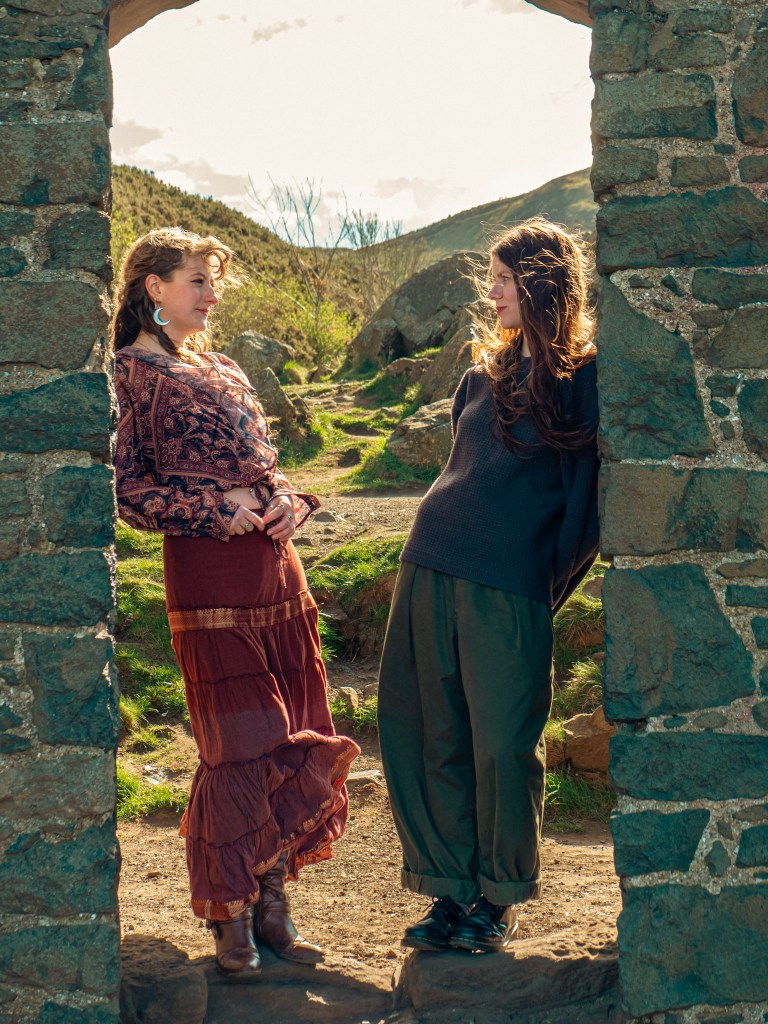
It is with a bittersweet heart that we sit down to write this editors’ letter, bidding farewell with the publication of ‘Solstice’ to our time at the University of Edinburgh and The Creator Magazine. Through this edition we have looked to the cyclical nature of the world around us and therefore we close this chapter whilst looking ahead to our own future, and the future of the magazine. As always, thank you to each reader passing through the pages; we hope you enjoy this collection of works from Edinburgh’s finest creators!
Throughout the creation of ‘Solstice’, we have been inspired by the relationship held by each of us to the natural world we live within, spotlighted in Emily Fitzpatrick’s ‘The Swallow’s Return’ and Lexie Leaver’s ‘Rum and Eigg’. We have also looked to folklore, myth and superstition to give us direction; see Lucrezia Santilli’s ‘The Faerie in the Spiral’. This connection to folklore and storytelling has led us to the mentorship of Linda Williamson and Claire McNicol, whose generosity has been invaluable throughout the coming together of ‘Solstice’. We are so honoured to include a short story by legendary storyteller and traveller Duncan Williamson, ‘Archie and the Little People’, within these pages.
The array of works presented to you within this edition follow a journey, shepherded by tales of those who have wandered it before. We sincerely hope that you enjoy them. At the same time, we implore you to remember the individuals and communities, such as the travelling community Duncan Williamson was from, whose folk culture has been obscured, erased, or reappropriated (see Tara Diana Kaiser’s ‘The Gathering (neonazis having fun)’). Our hope for this edition is to encourage a celebration of these traditions, cultures, and practices – read through these histories and stories as if they were your own!
Our deepest gratitude is extended to our contributors, who have generously shared pieces of their artistic souls with us through their poetry, prose, art and photography. It is a privilege to share your work with our readers; our magazine would be unable to continue without the creativity you have shown us. Our hope is that as this magazine has developed over the spring and will see us through the summer months, it will inspire each of you to a deeper understanding of your relationship not just to nature, but to each other. Listen to the stories of those around you and those who came before you, and bring them along with you as you wander into the sun.
All our love, Kristy and Meg
Co-Presidents and Editors.
An Interview with Jennifer Court
Tucked inside the turret of Virgin Hotels, within the historic India Buildings, sits Edinburgh-based artist Jennifer Court. A self-taught illustrator, Jennifer has become known for her meticulous pen-and-ink renderings of the city’s most iconic buildings and sweeping cityscapes.
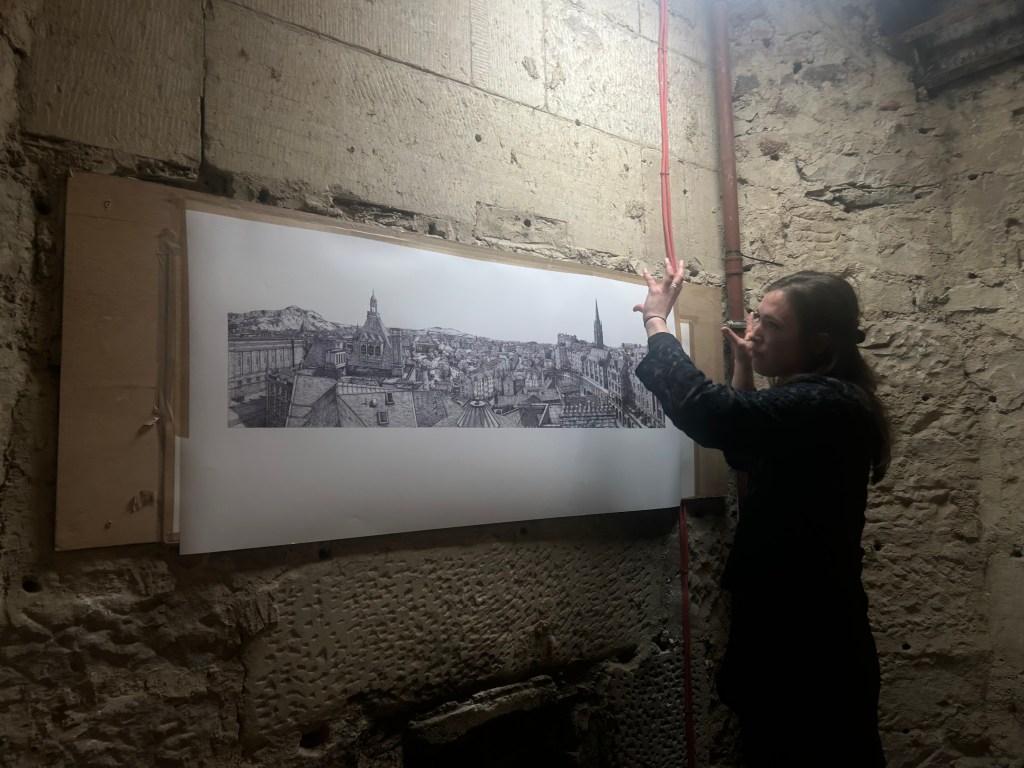
We were delighted to be invited by Stripe Communications, Virgin Hotels, and Jennifer herself to the unveiling of her latest project: an extraordinary 1.2-metre panoramic drawing of the Edinburgh skyline, captured from the very turret where she works. Jennifer’s studio, known as the Unicorn Room, sits within the India Buildings—an impressive example of Scottish Baronial architecture that once housed Trading Offices. The view from the turret is extraordinary, and so is Jennifer’s artwork.
Jennifer’s journey resonated deeply with us, particularly in light of our most recent issue of The Creator Magazine, ‘RIOT!’, which celebrates artists who disrupt expectations and forge their own paths. Her story exemplifies this spirit of creative defiance: proof that success in art does not require formal training. Talent, dedication, and a fiercely individual vision can be just as powerful.
Interview conducted by Freya Siebert, Lola Rodríguez, and Meg Leaver; transcribed and edited by Meg Leaver.
What is your experience as a self-made artist?
I didn’t get into art college when I left high school. I was pretty devastated at the time, so I decided to do history of art instead. I really stopped drawing for ages, but I also had that interest in art, so I specialised in the Gothic and medieval, so I’ve always had that interest in old buildings. I started drawing again in my spare time when I was in my mid-20s, and I was in a job that I really hated.
It [drawing] was like a therapy to me almost.
It was then that I started getting small commissions through friends and family, and I started doing a market here or there. It grew slowly over the last nine years. It was about four years ago that I went full-time. It’s been a really slow process.
Did social media have a play in that at all?
It was a bit of both [social media and word of mouth]. Over COVID, my social media blew up quite a bit. I did a lot of drawing challenges, so someone would post a picture online, and everyone in the arts community on Instagram would draw their own version of it, and it was a really great way to engage. I grew my social media quite a lot over that time, but I would say a lot of it was word of mouth as well. I would chat quite a lot to the people at the markets I was doing, and it would be like, “Do you want to draw my house?”, and then that would pass on to friends, and that is how it grew as well.
What is your main artistic inspiration?
I would say I am really inspired by the history, so I love old, interesting buildings and obviously, places like Edinburgh are absolutely amazing. I really like learning about the history alongside doing the drawings. For instance, I did a series about the closes on the Royal Mile. I’ve drawn about ten or fifteen of them now, and yeah, just also learning about who lived there over the years and just how it was created. I think that’s a big inspiration for me.
I also really enjoy learning about castle ruins, abandoned places, all these places that were something before what they are now.
That’s a big interest for me.
Why did you choose Edinburgh? What is your relationship with the city?
I’m from Penicuik, so nearby. I grew up here, but I don’t think I took as much of an interest in it when I was younger. I used to travel in on the bus every weekend and all that stuff. When I moved back, I used to live in London, and when I moved back, I started drawing more in my spare time. The first big drawing I did was of St Giles [Cathedral]. I think really from there I started drawing more of the old buildings, and it coincided with learning more about the history, and they’ve grown together really.
When I got the residency here [Virgin Hotels], I went to the library and did a lot of research about the Old Town specifically, and this building [India Buildings]. There is so much medieval history.
What is it like to work in the Unicorn Room, and up in the turret?
It is obviously very inspiring: getting lots of photos from the balcony and being able to work from right up against the wall in this very inspiring room. It’s very rustic, as you can see, but that adds to the general amazingness of this room.
What have you enjoyed most in your residency here and what draws you to this building [India Buildings]?
I think meeting a lot of the guests here has been really fun. There are a lot of Americans who really love Edinburgh and are so enthusiastic and genuinely love the city; it is really nice to see. There is a wee sign at reception that says if I am in the building and they can come up and have a look around. A lot of them have said that actually coming into this room [the turret] has been the highlight of their holiday, which is amazing because I think it is such an inspirational part of the city.
This building, I’ve drawn it several times, so I did some work for the hotel before it opened. When I have been in the residency, I have done a couple more drawings of the main door, the red door, and then the Commons Club, which is their restaurant. I just think there are so many interesting details on the facade of the building that I really love drawing.
Do you have any inspiring words of encouragement for any young artists?
You don’t need to go to art college. I obviously didn’t get in at the time, and I felt like that was the end for me, but it has come round naturally. I think if I had gone to art college, then what I would be doing now would be completely different from what I do. Do things your own way. I learnt a lot about perspective from YouTube and books.
Just do what you really enjoy and don’t worry too much about doing things the institutional way or traditional way.
Jennifer has been Virgin Hotels’ Artist in Residence since August. Check out her artwork, including the featured panoramic view, until the end of December. She regularly posts her artwork on her Instagram, @jennifercourt_art
Thank you to both Stripe Communications and Virgin Hotels.
@stripecom
@virginhotelsedi
Kristy Galbraith & Meg Leaver (Co-Presidents & Co-Editors, 2025-26)
Editor’s Letter – for ‘RIOT!’
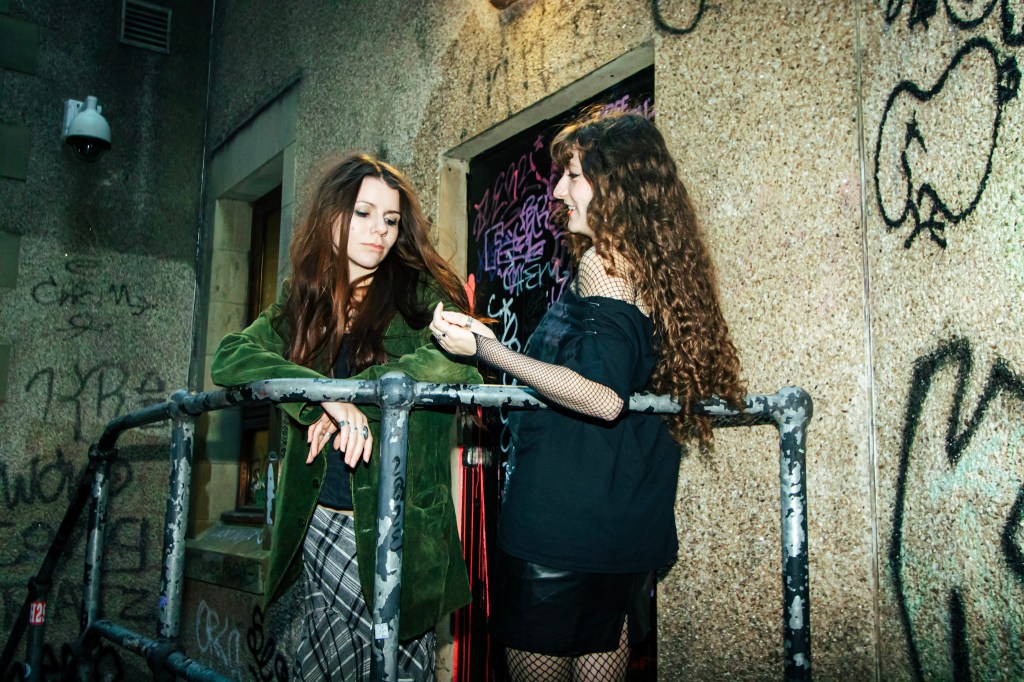
Welcome to the eighth edition of The Creator! This edition has found our team in a state of redefinition and renewed passion, which has been endlessly inspiring to explore through this edition’s theme, RIOT! As always, thank you so much for taking the time to peruse the beautiful works included from a variety of exceedingly talented Edinburgh creatives.
This collection owes its existence to a long history of dedicated activists and artists, spotlighted in Hannah Sylvester’s ‘She-Wolf’, Eilean Lough-Pare’s ‘My Body is a Battleground’, and Ines Roan Reid’s ‘We Are Entwined With Others’. The Creator has found its footing through questions of identity, community, and connection; in RIOT!, this ethos is turned outward to view the political turbulence this edition has come together within (see Vesper’s ‘FIRE IN THE UNITED STATES CIRCUS RING’). The array of works included are imbued with tension, anxiety, and the uncertainty of coming-of-age in the modern era, yet all draw attention to the hope of a better tomorrow (as seen in Melody Ding’s ‘On New Year’s Celebrations’).
We would like to extend our gratitude to our contributors who have generously shared their prose, poetry, art, photography, and reflections with us. The continuation of this magazine would not be possible without you, and it is an immense privilege to now share your art with our readers.
If we have one wish, it is that RIOT! encourages you to see the world with renewed hope and a deep understanding of each individual’s importance in collective action. What will you take forward with you from this edition into your own political consciousness? Which of the following pieces will best reflect your passion, your values, your fears, and your hopes?
With all our love,
Meg Leaver and Kristy Galbraith
Presidents and Editors
Molly Reed (Founder, Co-President & Poetry Editor (2022-25)
Editor’s Letter – for ‘Reflection’
Dear Readers,
Welcome to the fifth edition of The Creator Magazine, which explores the theme of Reflection! As always, thank you so much for taking the time to enter into this space and peruse the beautiful work submitted here by students from The University of Edinburgh and beyond. The quality of the pieces published in this edition is outstanding- ranging from artworks that quietly reflect the everyday beauty of the people we love (see Ysobel Gouriet’s ‘Figures in thought’ series) to poetry on the slippery meaning of masculinity and pub culture (as explored in R. W. Thorne’s ‘The Men in My Pub’). It is an honour to be able to read and publish the work of these young creatives, and I am so grateful for your ongoing support- we couldn’t do it without you!
As the first edition of 2024- an edition being published in the budding, watery light of an approaching spring- the theme of reflection seems more than fitting. Its plethora of potential meanings, as outlined by the pieces in this edition, include nostalgic reflection, the glimpse of yourself in a passing mirror or a muddied pool and the ways in which you are reflected by the behaviours of the people you love (and the people you don’t). As Sophie and I discuss in our Editors’ interview, reflection is a powerful tool, and one that is central to our experience of founding and developing ‘The Creator’ as both a Magazine and, since December 2023, a University Society. Now more than ever, I find myself reflecting on October 2022… on the strange, panicked girl I was then, and on the beautiful creation that emerged as a result- this magazine, thanks to the tireless work and commitment of the wonderful Editorial and Design team and our own belief in this publication’s potential. I am so proud of what we have created, and of the voices we have been able to spotlight thanks to the support of you wonderful readers.
I encourage you to toy with the notion of reflection- of the boundary between remembering and idolising, of remaining trapped in the shadowy echelons of your past or of rejecting and stifling it all together. What does it mean to ‘reflect’? How useful- or how damaging- is the act of reflection? And, most importantly, how can you create a version of yourself- in this slippery new terrain of adulthood- that you can be proud of? That reflects your values, fears and hopes? This edition is dedicated to that constantly evolving version of you- and all the reflections of yourself that you see embedded in the social and familial fabric of our lives.
Happy reflecting!
All my love,
Molly Reed (she/her), (Founder & Poetry Editor)

 The Creator